









Select a category

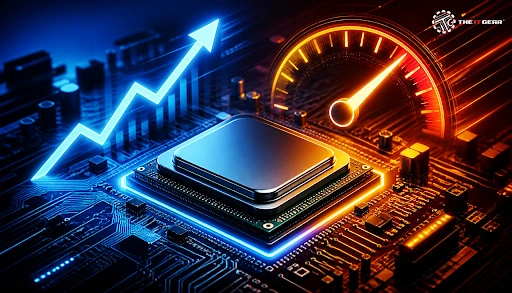
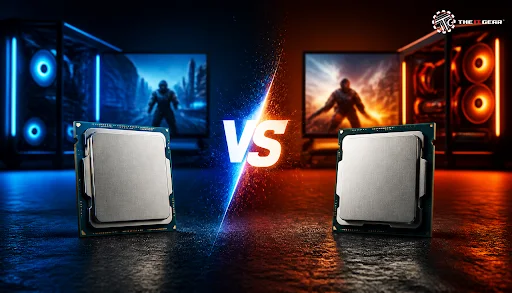
Overclocking has long been a favourite topic among PC enthusiasts, gamers, and content creators who want to extract maximum performance from their hardware. With both Intel and AMD offering processors with unlocked multipliers, pushing a CPU beyond its factory settings has become more accessible than ever.
But what does overclocking a processor actually involve, and is the performance gain worth the risk? This guide breaks down everything you need to know.
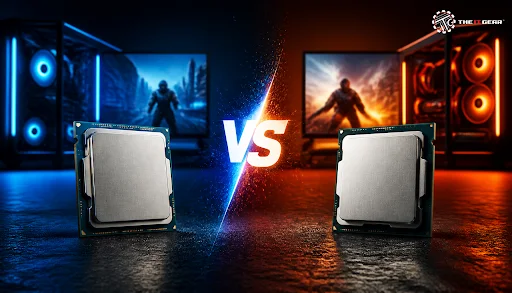
The term overclocking a processor is extremely misleading. The phrase itself suggests that the processor is clocked at a higher rate to increase performance. In essence, overclocking entails the processor being used outside of its normal operating parameters. In its most basic form, CPU overclocking meaning is operating a processor above its stock or factory speed.
Although all processors have a rated clock frequency in GHz, overclocking raises that specification by a given amount by changing the base clock, the clock multiplier, or increasing the core voltage.
This is done via the BIOS or UEFI interface, or through software utility packages supplied by the various hardware manufacturers. Certain processors, for example, Intel's K-series and AMD's Ryzen line, have unlocked multipliers built in expressly for this purpose — resulting in more instructions executed per second, and so, faster computation.
Absolutely, overclocking your CPU will increase performance, but how much that increases, you will see, is down to the workload. What you will be noticing for CPU-bound workloads, like video encoding, 3D modelling, and esports games at 1080p, is that increasing the clock speed results in a rise in frame rates and fewer frames drops.
Overclocking also increases frame times as the CPU is able to cope with the GPU better. When it comes to the graphics card being the bottleneck, the extra processor speed will probably produce almost no visible improvement.
Also, normal daily activities such as surfing the net and general word processing are unlikely to be improved as there is so much inherent headroom in a modern CPU. This is precisely why the reviewers use benchmarks to actually show where in the real improvement overclocking makes a difference.
Overclocking your processor is generally a recommended course of action for gamers and enthusiasts. It offers a free performance boost, can help your CPU remain competitive as software demands increase, and is an interesting, practical way to learn more about your hardware. Modern PC components, as even Intel admits, are rated for higher temperature operation than most users think.
But for casual users, the average user does not need to worry about manual overclocking. For today's processors, automatic boost technologies exist that increase the clock speeds when workloads demand it. If you are using stock cooling, lack interest in stress testing, or cannot tolerate occasional system crashes, the potential downsides may outweigh the benefits.
Contemporary overclocking has evolved beyond the BIOS and entered the realm of software utilities that allow for dynamic, on-the-fly modifications while also featuring very effective safeguards. Such applications are perfect for those new to overclocking since they incorporate monitoring, benchmarking, and stress testing all within one simple-to-use graphical interface. Below are the most popular applications.
CPU Overclocking Intel with Intel XTU
For Intel platforms, the Intel Extreme Tuning Utility is the essential software for overclocking. With it, you can change the core multiplier, core voltage, and set power limits on unlocked K-series processors like the Intel Core i7-14700K or the Intel Core i9-14900K. Intel XTU also has a built-in benchmark and stress test so you can check stability before applying settings permanently.
AMD Ryzen Master Overclocking
For AMD CPUs, Ryzen Master overclocking gives similar functionality. It gives individual CCX clock control, fine-tuned voltage adjustments, and a curve optimizer for individual cores. This includes a Precision Boost Overdrive mode that automatically increases the boost clock without any need to modify voltages, making it ideal as a first step. Popular choices for overclocking include the AMD Ryzen 7 7700X, AMD Ryzen 5 7600X, and the AMD Ryzen 9 7950X.
Overclocking Through BIOS/UEFI
If you want a 100% tried and tested method, use the BIOS/UEFI. It allows permanent settings, deeper control over memory timings, and broader compatibility. Due to the varied nature of alternatives, the main downside of the BIOS is if wrong configurations are put into the BIOS, the system will not start up. Clearing the CMOS will normally repair this. For the best BIOS, look for a motherboard with robust power delivery and a BIOS with a logical easy-to-use interface at The IT Gear. Models like the Gigabyte Z790 Aorus Master X or the ASUS ROG Maximus Z890 Hero are excellent choices for serious overclocking.
Overclocking can fry your processor, but it needs the right set of circumstances. Too much heat could set off the charge to throttle the system (which imposes a certain limit), run the system unstable, or fry the silicon permanently. Intel advises that a one-time enormous jump in speed can hard lock a CPU.
Voltage would be the other main consideration. Increasing core voltage increases the rate of electromigration. Electromigration is the process of passing high electron currents through microscopic traces inside the chip, thereby destroying the dielectric that keeps the chip from shorting itself out.
Increasing core voltage to dangerous levels increases strain on the motor of the electron propellant that is transporting the electron current; But, most safe overclocking can be done with small jumps involving good cooling, and very conservative voltage limits, that greatly reduce the risk without dropping performance too much. Modern CPUs have thermal shutdowns just in case.
Yes, 4.7 GHz is a very fast clock speed for a contemporary chip, mostly for gaming. Still, clock speed is not everything. Architecture and IPC are also as important - a CPU running at lower clock speed with higher IPC can beat its rival at higher clock speed in many workloads.
Keeping 4.7 GHz running is also a function of your cooling solution and your motherboard power delivery. In the warmer Indian climate, it takes a solid aftermarket cooler to maintain such speed under load (mostly in the summer). Quality CPU air coolers like the Noctua NH-D15 chromax.black or AIO liquid coolers such as the Arctic Liquid Freezer III Pro 360 are essential for maintaining stable overclocks in hot conditions.
Ultimately, the usefulness of the overclocked CPU depends on how you use it. If you are a gamer after higher frames per second in CPU banking titles, or a video editor hours away with exported renders, an overclock can save you an enormous amount of time and provide a particularly smoother experience, simply the best free upgrade to any desktop PC.
Meanwhile, recent wide-core CPU models from both Intel and AMD already push around the physical limit of the CPU, providing very limited room for the user to manually overclock and so giving little reason for the user to buy better cooling solutions.
If you are trying to jump-start a new system dedicated for overclocking, then selecting the proper components is important here. The IT Gear gives plenty of unlocked CPU models from Intel and AMD, Z-series & B-series motherboards, or even physical CPU coolers if it's set to build a new overclocking test rig.
If you have decided to try overclocking a processor, keep this checklist handy:
1. Ensure your CPU is unlocked. Overclocking by multiplier is exclusive to Intel K-series, AMD Ryzen (or equivalents). A locked chip cannot be manually overclocked by a multiplier.
2. Invest in decent cooling. An aftermarket air cooler, or an AIO liquid cooler is essential for keeping the temperatures under load safe. Options like the Cooler Master MasterLiquid Atmos II LCD 360mm or the DeepCool Mystique 360 offer excellent thermal performance.
3. Raise the clock speeds in small steps. Going directly to the desired frequency can risk instability and damage: rescale gradually.
4. Keep an eye on CPU thermals and voltage at all times. HWiNFO or Core Temp are useful applications to keep an eye on thermals and always stay within the recommended range of voltage for your CPU.
5. Stress test after each change. Before moving on, ensure that Prime95 or Cinebench can run for at least 30 minutes without crashing the system.
6. Have an emergency plan. In case of system failure or crash, have a way to reset the CMOS or return to stock settings.

Overclocking a CPU can bring real-world gains, but calls for time, patience, and cooling solutions. Whether you overclock an Intel CPU with XTU, or tweak an AMD chip through Ryzen Master, the rules are still the same—patience, testing, and cooling. If you take the time to learn what you're doing, overclocking is a safe and worthwhile experience.
Are you considering doing a build or upgrade? The IT Gear offers a broad selection of high-quality components for overclocking including unlocked chips, power-hungry motherboards, and cooling materials. Check out The IT Gear online now!
Can I overclock my CPU on Windows 11 or Windows 10?
Yes, both OS support overclocking of CPU using either Intel XTU, AMD Ryzen Master or the BIOS/UEFI. The procedure will be the same on both versions of the OS.
Is CPU overclocking safe for daily use?
Can be safe if it limits recommended voltage, adequate cooling, and passes the stability test. Can be unsafe if ignored temperatures or high voltage.
How to safely overclock CPU Intel?
Use Intel XTU to incrementally increase the core multiplier and run stress tests. Keep an eye on the temperature while doing this to ensure it is below 90°C and if the system crashes, restore to the last stable setting.
How to overclock GPU?
GPU overclocking operates on the same principle: just higher core and memory clocks by incremental value via MSI Afterburner, and use Unigine Heaven (or similar) or FurMark to test the stability.





#No. 9, 5th Floor, Max City Center, T. P Lane, Sadar Patrappa Road, Bengaluru - 560002 (Karnataka)