











Select a category

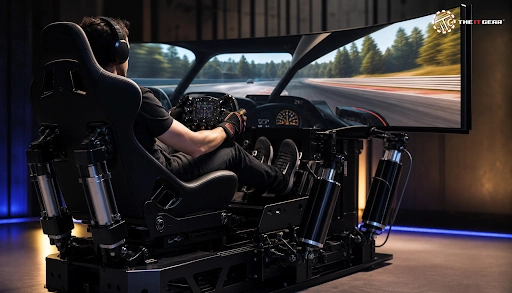
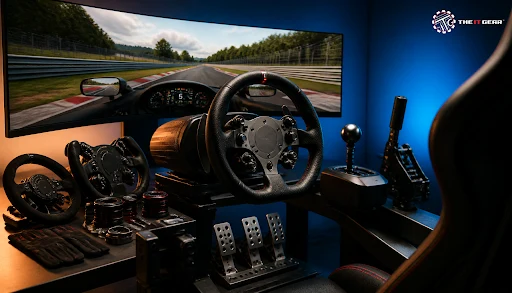
Over the past few years, sim racing has come a great way. Sim racing is no longer regarded as a simple way to pass the time, it's been a serious part of Motorsports training. The biggest change among these is the introduction of the hydraulic racing simulator: a very complicated mechanical system that uses hydraulic fluid to recreate a driver's body movements as in-real race cars.
Unlike traditional rigs or even simple motion platforms, a hydraulic sim racing rig gives a far higher sense of realism with the ability to mimic the G-forces, the braking dive, the squash under acceleration, and the cornering with great accuracy.
Sim racers from India are now looking to get a new level of racing from their home setups and understanding of a hydraulic racing simulator and its features and how it works with different motion systems has been essential for that. As an esports professional gamer, a motorsport enthusiast, or even someone just creating the best home setup, this article guide will be giving you all the information you need to find out about and maybe purchase a hydraulic gaming simulator.
The main point of the hydraulic racing simulator is that hydraulic actuators, those tubes filled with pressurized fluid, are used to raise and lower the simulator as needed, which is why the cockpit gets a physical reaction, to give the impression of a real vehicle.
Instead of a pneumatic or an electrical system, a hydraulic system can be much bigger, and it will give you a more realistic and better motion experience. So, a hydraulic rig is the way forward, if you dream of a racing setup of top quality.
Understanding the Hydraulic Actuation System
Your hydraulic sim racing rig will always have a hydraulic actuator system. The working principle of hydraulic actuators is very simple. They use fluid pressure (hydraulic fluid usually being oil) to change the length of the cylinders (move the piston) which in turn gives a movement.
The whole system (hydraulic pump, storage tank, control valves, & actual actuators) allows the movement as required, and the movement, in turn, simulates acceleration, braking, cornering, and even bumps.
For force delivery, the hydraulic system is way more efficient than electric or pneumatic systems. For the given power level, hydraulic systems take up less space than their rivals. This is why professional Flight Sims and Racing Teams that use sim racers extensively use hydraulic motion systems!
How Telemetry Data Translates to Physical Motion
The real secret behind the excellence of sim racing with a hydraulics platform lies in how the computer programs connect with each other, and the hydraulic simulator is also capable of using those for its movement generation. This article explains how the movement of the racing simulator is connected to the data.
The simulator program gets information (telemetry data) from racing games like iRacing for example. Details of the car's acceleration/deceleration brakes steer, wheel travel, and road conditions are included in that information. The motion controller analyzes the data then directs the hydraulic valves and creates immediate sensory feedback through physical reactions.
Braking hard in a game, for example, causes the simulator to tilt the rider's seat or whole unit forward, giving an illusion of a weight transfer (shift in mass). After a turn when one revs up, the simulator lifts the rear part (mimicking squash of rear body) to give an appropriate feeling or weight of a car when accelerating forward with a big engine power.
The motion platform in a sim racing gear is of different types, which include electric (servo-motor) motion systems, pneumatic, and hydraulic. Every sim racer's decision comes with their knowledge of these motion systems, and if they were to decide on a platform they would choose from these three only: a motion platform with electric motor, a motion platform with pneumatic system, or a motion platform with hydraulic system.
The reason hydraulics is favored by the most devoted sim racers is that, first of all, among the three motion type choices, they can produce the most significant amount of force.
Superior Force and Realism
Hydraulic systems are by far more powerful than electric or pneumatic. So, they can very precisely simulate the G-forces in a real racing situation. While the average electric motion system delivers merely 10-20% of real-life forces, a high-performance tuning of the hydraulic simulator could be able to reproduce 50-80% of the real G-loads, which is the factor that creates a sense of a real racing experience.
Smooth and Silent Operation
Smoothness is one of the major attractions of hydraulic sim racing rigs. Fluid in a cylinder is a damper, it is a natural dampener of shocks thereby a smoother ride is provided in a simulator. There are also very few moving parts with modern-day hydraulic systems which makes the system practically silent in operation. The sounds you will hear are from game audio and the rumble of the virtual motor instead of the noise from motors and pneumatic actuators.
Durability and Longevity
Hydraulic parts are designed to withstand rigorous environmental and mechanical conditions. A hydraulic sim racing machine could serve a sim racer for up to thirty or forty years (even more!) given the components are kept properly lubricated and maintained in a clean environment. Sealed actuators and valves which are the main hydraulic components are dust and debris-free making them suitable for use at home.
To set up the whole hydraulic simulator you need several different parts which go together. Each component's role explained below would allow you to wisely decide what to choose or how to build your unit.
The Hydraulic Motion Platform

The base of the unit is the main element of this equipment. A majority of simulators that are built on a hydraulic system operate on either a two degrees of freedom (2-DOF) or three degrees of freedom (3-DOF) design. In a 2-DOF platform, movements that happen are those which include a change in direction - that is, a forward/backward tilt (pitch) combined with a side-to-side tilt (roll). In a 3-DOF platform, this is complemented with vertical movement (heave).
More sophisticated motion systems offer 8 DOF or even 6 DOF to simulate every motion accurately. But, such systems generally do not fall into the category of home setups because they are too professional and their price can be high.
The Sim Racing Cockpit and Seat
For a cockpit or a seat of the simulator to handle the hydraulic system's generated forces, it should not bend much or have very high flexibility. The most preferred types are those made with aluminum profiles by manufacturers such as Sim-Lab or Trak Racer, as their rigidity is sufficient but can also give good adjustability to the user and even the customizations that are possible.
During high-G maneuver racing situations when a race car driver might experience high forces, a racing seat must be the one that can adequately provide body support so that the race car does not hurt and the driver is safe. It is highly recommended to get one from a reputable sportswear brand, such as NRG or Sparco, that produces sports racing seats. You can explore a range of racing cockpits and sim racing seats available in India.
Steering Wheel and Pedals
In a high-fidelity hydraulic racing simulator experience, a direct drive base and load cell pedals is what complements the system's top performance. These wheelbases offer a very detailed sense of the road texture through the wheel as it has force feedback. Brands like Moza Racing and Fanatec offer excellent racing steering wheels and pedals that pair well with hydraulic platforms.
The Hydraulic Power Unit (HPU)
The Hydraulic Power Unit usually comprises the pump, the motor and the control unit, and the fluid tank. This unit generates pressure of the hydraulic fluid needed for the movement of the equipment. A very important feature for an HP would be variable speed control, so the level of motion can be different each time, safety components such as pressure relief valves and also good temperature management for long time usage.
Knowledge of some basic Hydraulic principles will be very helpful when deciding whether to buy a hydraulic racing simulator or if you have bought, to get maximum benefit from one. It also will save you from having to guess in case of issues or how to make your device work best for you.
The 7 Rules of Hydraulics
The basic operations of a hydraulic system are governed by seven core principles:
1. Pascal's Law : It explains that the pressure you apply to a limited space will equally spread in the entire fluid.
2. Pressure is determined by load: The pressure level in a hydraulic system rises until it is sufficient to tackle the friction of the load.
3. Flow determines speed: A high-speed of flow of the liquid leads to a faster speed of the movement of an actuator, pressure being not related in this case.
4. Force equals pressure times area: A change to one side of the piston, all other parameters being kept in equal level will cause a change on the working effect.
5. Fluid takes the path of least resistance: The hydraulic liquid always chooses to flow through the least difficult one of the possible paths.
6. Heat is wasted energy: Any drop in pressure within a valve or a restriction will result in heating, as the energy has to be converted, which decreases overall efficiency of the system.
7. Contamination is the enemy: The cleanliness of the oil in the system is crucial as the life of the system as well as the performance of the system greatly depends on it.
The 5 Main Components of a Hydraulic System
This is the minimum number of components which are present in all the hydraulic systems, starting with the hydraulic sim racing ones:
1. Reservoir: Holds the hydraulic fluid and allows for thermal expansion and contamination settling.
2. Pump: Converts mechanical energy into hydraulic energy by moving fluid.
3. Valves: Control the direction, pressure, and flow of the fluid.
4. Actuators: Convert hydraulic energy back into mechanical motion (the cylinders that move your simulator).
5. Hydraulic Fluid: The medium that transmits power and lubricates components.
Here's a list of things you need before you decide:

Racing a hydraulic racing simulator is really the top notch in sim racing experience, where the virtual racing will be brought to your living room using real-feeling immersion. As you have read through about what hydraulic actuators do and how they can be a good addition to your simulation set up, this guide has been an excellent reference for the main facts you should always keep in mind before picking out your racing equipment.
If you are upgrading from a static rig or starting from scratch, you know that you will be better off with a racing setup that gives the right physical feedback, which is just the job you will be able to achieve with a racing simulator with hydraulic mechanism. For an Indian sim racer, The IT Gear is the first port of call as they sell racing simulator equipment to be found nowhere else in India and they are the kind of people with the expertise to build the best racing simulator ever. To have a closer look at what sim racing simulators you can find on their site and also for any assistance, their website should be visited.
Q: Is a hydraulic racing simulator suitable for beginners?
A: Although hydraulic racing simulators are capable of delivering real-time experience and because of this offering excellent realism, there are several disadvantages related to this type of racing rig. They can be quite expensive and the installation can also be complicated and so require that some level of technical knowledge is present on the part of the user. For beginners, it would be better if they start with a static rig and also a quality direct drive wheel before even thinking of an upgrade to a hydraulic motion system.
Q: How much does a hydraulic gaming simulator cost in India?
A: From the range of hydraulic racing simulator kits on the market with varying numbers of motion axes, it's very hard to give an exact number of the cost involved. But if we consider the price of the components included, the most reasonable price range would probably be between ₹500000 and ₹1500000. The IT Gear has multiple different configurations that they offer at varying price levels and because of this suit different budgets.
Q: Can I use a hydraulic racing simulator with any racing game?
A: Since the motion platforms have become quite widespread, they are supported in most racing games through the game telemetry output. Games such as iRacing, Assetto Corsa Competizione, rFactor 2, and RaceRoom Racing Experience run really well with hydraulic systems.
Q: How long does it take to set up a hydraulic sim racing rig?
A: First of all, the mechanical parts can take around 4-8 hours to assemble, and apart from that there are the software configurations and calibrations to be worked out. A professional installation tends to be a service that specialist dealers offer.
Q: What maintenance does a hydraulic racing simulator require?
A: On a regular basis, the maintenance includes: checking the levels of hydraulic fluid, inspecting the seals for leaks, cleaning the filters, and checking that all the connections remain tight. It is advisable to replace the fluid once in a year to get the optimum performance out of it.
Q: Is a hydraulic sim racing rig safe for home use?
A: Yes, safety depends on the correct installation and following manufacturing guidelines on your use of it. Make sure you have enough space around the platform, use the safety straps if they are recommended, and under no circumstances operate the system when children or pets are inside the motion envelope.
Q: Can I build a hydraulic racing simulator myself?
A: DIY systems can be considered in case that hydraulic systems are used. Still, it takes a very high technical level to be able to work with hydraulics, electronic systems as well as programming languages. That means, most of the enthusiasts opt for buying complete systems from well-known brands to guarantee their safety as well as top performance.





#No. 9, 5th Floor, Max City Center, T. P Lane, Sadar Patrappa Road, Bengaluru - 560002 (Karnataka)