All Category
All Category

India’s Trusted Custom & Gaming PC Store
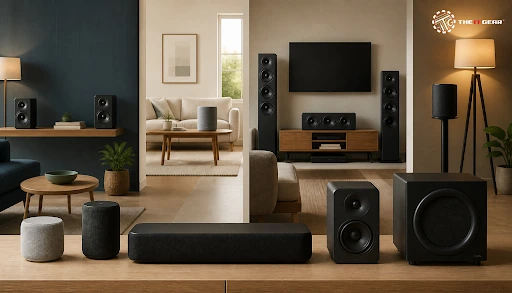
Many purchases by customers of speakers in India fail simply because they pick the loudest speaker based on spec sheets instead of matching a speaker to their room. The speaker that delivers good sound in the showroom might end up getting a muffled sound in the small bedroom or get lost in the large living room. We have got a room-first strategy to pick a suitable speaker.
Room size has to be the main decision. Rooms under 100 sq ft, Indian bedrooms/ study rooms, these are perfectly served by bookshelf speakers. A moderately sized living room with floor area of up to 200 sq feet may have bigger bookshelf speakers or smaller tower floorstanding speakers. For spaces above 200 sq ft, floorstanding speakers or bookshelf speakers plus a subwoofer should be considered to get better bass level.
Even room materials play a big role. The sound is reflected off the glass and the concrete walls, creating echo and harsh treble. The sound is muffled by the carpets and the curtains, which brings down the clarity but the volume is perceived as lower too. It would be advisable to take away the speakers with a neutral or slightly warm tonality to avoid overemphasis for reflective rooms and bright speakers for heavily furnished rooms. That is a simple room-first reasoning which you will find to be behind all the decisions.
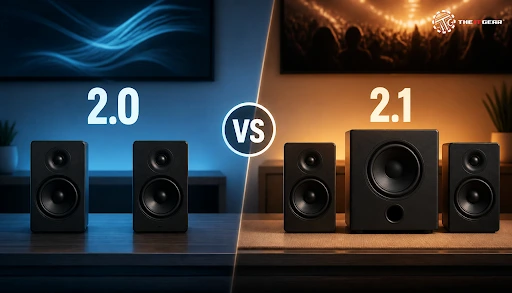
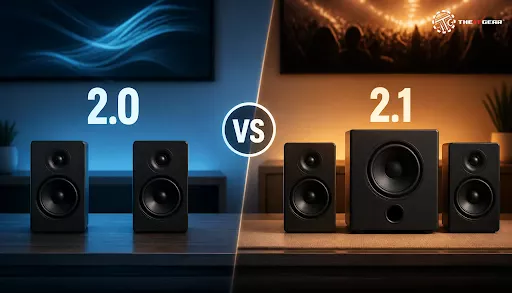
In a music-focused house, a good pair of bookshelf speakers in a 2.0 or 2.1 stereo setup will do. For film lovers' living rooms, you will need a centre channel to carry out the movie dialogues properly, so you would go for a 5.1 system. With the small size apartment where both music and movie play together, the soundbar comes handy that is accompanied by the subwoofer and offers the best of both worlds.
In apartments and TV watching centric living rooms, the most convenient upgrade to the sound is a soundbar. Go for models with HDMI ARC functionality if both the TV remote and the volume controls are synced. A subwoofer, either wired or wireless will help a great deal in bass and this is one area where soundbars generally come short.
You just need to unbox the soundbar and put it up - around 20 minutes - no stands required. And rooms smaller than 150 sq ft will sound perfectly with them which is one of the main reasons why the soundbars have become popular in the renting sector.
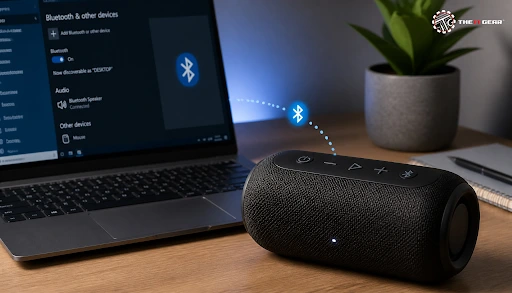
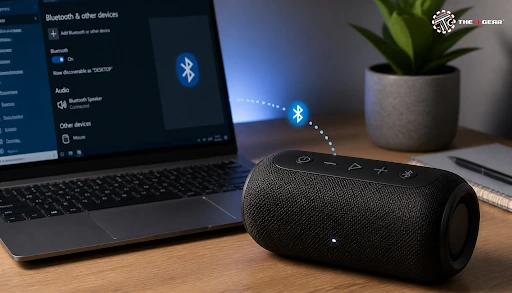
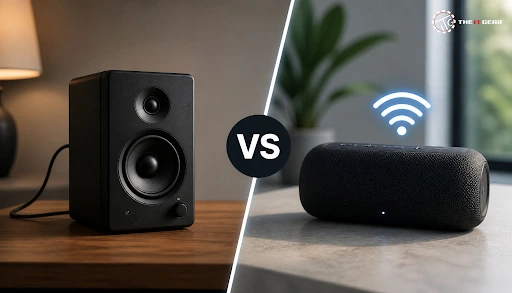
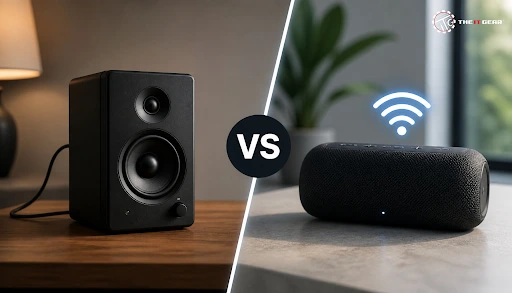
A Bluetooth speaker is ideal for both portable use and casual listening. Look for Bluetooth 5.0 or newer version to avoid the issues related to poor connectivity and also to get a range of about 10 meters. If you are not using this outside only, then the support for aptX can really improve the quality of the wireless audio.
If it's meant to be used on the desk, get one of the powered bookshelf models with aux and optical inputs plus Bluetooth. If you're going on a trip, the features to go for would be a good battery life and waterproof rating of IPX7. Most buyers are satisfied with 10-20 watt RMS power speakers in the house and 30+ watt speakers outside the house.
The subwoofer is the speaker responsible for reproducing the bass notes that regular speakers cannot handle - the rumble of a movie explosion, for example, that a bass guitar cannot play. You choose the correct type for your room: 8-10 inch subdriver size would fit under 150 sq ft rooms; 10-12 inch driver models are appropriate for 150-300 sq ft areas, and bigger or double subs are used in dedicated theater rooms. Enclosed subwoofers produce accurate, musical bass, where vented designs boost power for cinema applications. Corner positioning enhances the bass level, but may make the room overly reverberant. Continue experimenting until the level of bass is flat across the room.
The 5.1 system consists of five main speakers besides a subwoofer which is the most popular multichannel surround sound format and fits in ordinary living rooms. 7.1 system features two extra back surround speakers, enabling a roundabout 360-degree sound experience.
Yet it is not until you place all your chairs more or less eight to ten feet away from the screen that you get the advantage. Most homes in India would do well by investing in a good 5.1 system instead of the extra channels that the house is not able to support.
Such a speaker positioning guide will not just help greatly with imaging but also with bass response.
First of all, spread your front speakers out at about 83% of the distance from your listening spot to each speaker. A slight contraction of the triangle from the regular equilateral format would help you to get rid of the reflections in the sidewall.
Second of all, sit at your listening chair about 83% of the space length away from the front wall to avoid standing-wave pressure zones.
Third, floorstanding speakers should be 18-24 inches away from the rear wall while the rear of the speakers is pointed toward your sitting position.
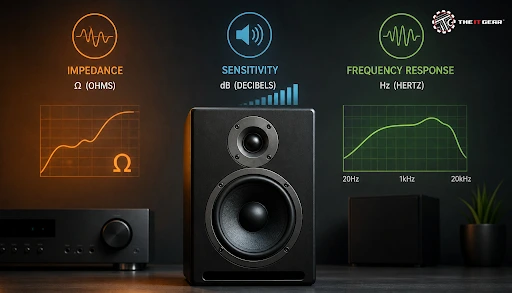
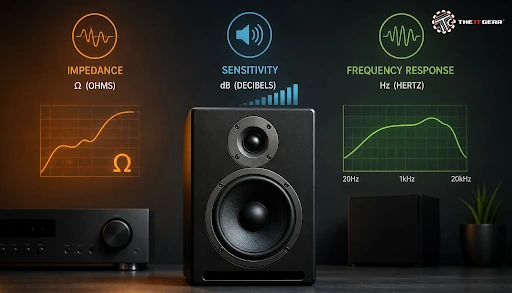
Your speaker purchase should receive the lion's share of your entertainment system's budget. After all, it is the speaker that will mainly determine the sound character of your setup. Be cautious about PMPO (peak power of amplifier) advertising - this does not represent what a speaker can continuously do. You really ought to look at specifications like continuous RMS power, sensitivity and a reasonably flat frequency response accompanied by sufficient bass extension.
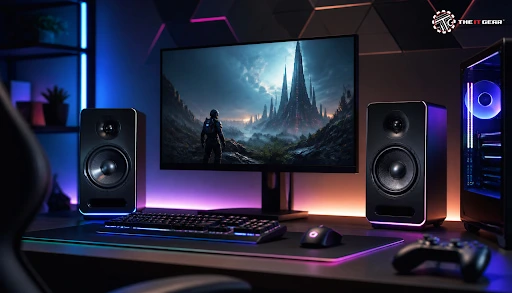
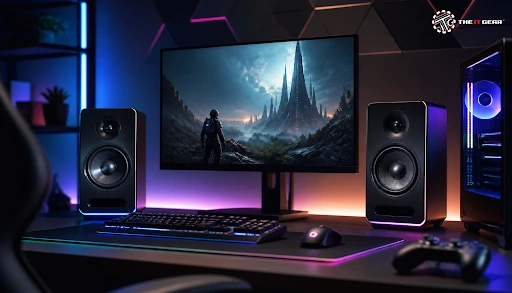
The biggest mistake is putting a large bookshelf floor speaker in a tiny room or choosing tiny speakers in large reflective spaces. Both scenarios will seriously affect the listening pleasure factor. If you're building a complete entertainment setup, you might also want to check out our guide on gaming PC setups to pair your audio with the right visual experience.
1. Calculate room space - first of all, check how big the floorspace is in square feet. Rooms that are 100 squares or less should go for bookshelf speakers. Whereas, bigger homes, those above 200 sq ft, should go for floorstanding speakers or even better get themselves a subwoofer!
2. Figure out the major activity - listening to music suits mainly a stereo arrangement, movies require a sub plus several surround channels, and gaming can do with the low latency connections.
3. Decide on speaker format - bookshelf, floorstanding, soundbar, and Bluetooth portable are all kinds. This should be the result of room size and main usage case decision.
4. Go over the stats - don't go by peak wattage, compare RMS power, sensitivity and bass reproduction capabilities. A flat frequency response means that the speaker is faithful to the original sound.
5. Plan the positioning - stick to the 83% rule, leave at least 18-24 inches to the back wall and aim the speakers at the spot where you will be sitting for an accurate stereo picture.
When you are looking at choosing a speaker system for yourself, you should consider how much space you have, how you mostly use the audio system, and what price you are willing to pay. Once you decide where based on your space, the rest is a simple matching up the right choice for your needs and budget.
At The IT Gear, you will find speakers, soundbars, and home theater systems in a range of sizes and styles that fit Indian budgets and room conditions. Whether it is a single compact bookshelf speaker or a full-fledged 5.1-system, The IT Gear helps you discover connectivity options, warranty coverage, and pricing for the perfect setup. You can also explore our selection of gaming furniture and monitors to complete your entertainment corner.

Q1: What is the best audio system for home in India?
The system that suits you the most will be one that can match the area, the room and purpose of use. It could be anything from a soundbar that fits in a tiny balcony apartment to a pair of bookshelf speakers that are perfect for music-oriented small spaces up to 200 sq ft and then the larger ones 5.1 or 7.1 systems which go well in big living rooms and specially made home theaters. Always check the availability and after-sales support of the brand you pick before you make a final decision.
Q2: What is the lowest price music system for home?
Budget Bluetooth speakers usually start between ₹1,500-₹3,000. Very fundamental 2.0 bookshelf systems with a small amplifier are around ₹8,000-₹12,000. Soundbars with subwoofers usually range from about ₹10,000-₹15,000. In such situations, it's good to focus more on RMS power output and type of connectivity rather than going for a well-known brand only.
Q3: What are the top music systems for home?
In order of their merits you will get portable Bluetooth speakers, a pair of speakers with power for stereo, a TV soundbar, and a movie immersive 5.1 system. Worldwide, the most advanced are the top towers and the 7.1.4 Atmos systems that go up and down in sound and light. However, one can argue that a good mid-range speaker setup will give better results in the wrong room compared to a flagship product at twice the price.
Q4: Which small music system is best for a small room?
For small spaces less than 100 sq ft, bookshelf speakers are recommended because they are compact yet give a clear powerful sound at a reasonable level. Alternatively, you can also go for the small soundbar which fits into any room regardless of its shape or size and is not so bulky. It's also not a bad idea to add a separate small subwoofer if your main type of music happens to be the one with a strong beat. But be sure you use headphones when necessary.
#No. 9, 5th Floor, Max City Center, T. P Lane, Sadar Patrappa Road, Bengaluru - 560002 (Karnataka)
Get deals, launches & tech updates.





#No. 9, 5th Floor, Max City Center, T. P Lane, Sadar Patrappa Road, Bengaluru - 560002 (Karnataka)
GST Billing • Bulk Orders • Corporate Deals